School of Information Sciences

Schneider joins GSLIS faculty

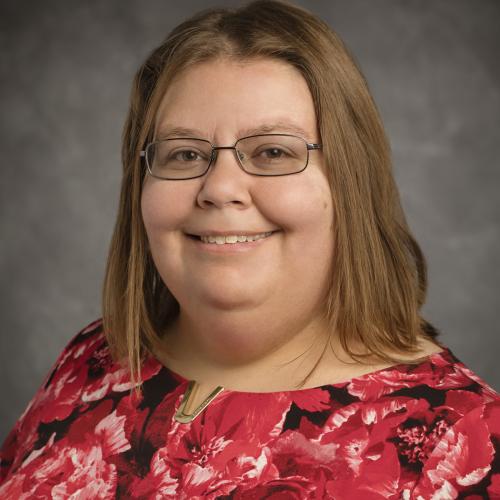
Jodi Schneider
Jodi Schneider, Affiliate Associate Professor

GSLIS is pleased to announce that Jodi Schneider will join the faculty in August 2016.

For the next year, Schneider will be a postdoctoral scholar in the Department of Biomedical Informatics at the University of Pittsburgh, supported by the National Library of Medicine and the National Institute of Dental and Craniofacial Research. She recently completed a postdoctoral fellowship at INRIA, the national French Computer Science Research Institute, funded by a highly competitive ERCIM Marie Curie Fellowship.

Schneider’s research interests include computer-supported cooperative work; linked data including ontologies, metadata, and the semantic web; and scholarly communication. At GSLIS, she is looking forward to continuing her research into evidence curation as well as collaborating with other GSLIS faculty on complementary projects.

“My passion and area of research is about understanding evidence. Currently my colleagues and I are working on understanding and improving how clinicians (doctors, pharmacists...) use evidence about whether it's safe to combine two or more medications—an issue that is faced more often as patients age and accumulate health conditions. It takes experts a long time and a lot of work to make sense of the current knowledge on a topic. Supporting people in evidence curation can help reduce the gap between what we know scientifically and what we do in a clinic,” said Schneider. “Our current work can be used to improve medication safety, but in the long run this work can impact many fields, including medicine, law, education, and management.”jodi_schneider_web.jpg?itok=vcCQDTb3

Schneider’s research has been published in journals such as Semantic Web and Biomedical Semantics and in top computing conferences such as the ACM's Computer-Supported Collaborative Work. Her dissertation used Semantic Web technology to organize Wikipedia information quality discussions.

“It may be commonplace to say that the new communication and information technologies that we now take for granted are revolutionizing how we communicate and collaborate, but it is true. Some of these changes are obvious and some are not. Jodi's exciting and wide-ranging innovative explorations are advancing our understanding of these changes and suggesting new strategies and tools for using digital technologies for more effective communication and collaboration. What could be more important? We are very eager to have her join us,” said Allen Renear, GSLIS dean and professor.

Schneider previously worked as science library specialist at Amherst College and as web librarian at Appalachian State University. Her contributions to library technology include founding the Code4Lib Journal and co-authoring the "W3C Library Linked Data Incubator Group Final Report,” which has been translated into French, Spanish, Japanese, and Chinese. 

Schneider earned her PhD in informatics at the National University of Ireland Galway in 2014. She also holds a master’s degree from GSLIS (2008) and an MA in mathematics from the University of Texas at Austin, as well as a bachelor’s degree from St. John’s College in Annapolis.

Research Areas:
Tags:
Updated on
Backto the news archive

Related News

New multi-institutional project to use AI to represent past historical periods

A new project led by a team of researchers from four universities aims to create and evaluate language models that represent past historical periods. The project, "Artificial Intelligence for Cultural and Historical Reasoning," was recently selected for a 2025 Humanities and AI Virtual Institute (HAVI) award from Schmidt Sciences. The $800,000 grant will be split among four institutions: Cornell University, the University of Illinois Urbana-Champaign, The University of British Columbia, and McGill University. Professor Ted Underwood will serve as the principal investigator for the portion of the project at Illinois.

Ted Underwood

Wang group to present at WSDM26

Professor and Associate Dean for Research Dong Wang and PhD student Ruohan Zong will present their research at the 19th ACM International Conference on Web Search and Data Mining (WSDM 26), which will be held from February 22–26 in Boise, Idaho. WSDM is a premier international conference in web search, data mining, and AI, known for its highly selective acceptance rates. This year, the acceptance rate for the main track of the conference was only 16 percent. 

Dong Wang

New NSF award supports innovative role-playing game approach to strengthening research security in academia

A new National Science Foundation (NSF) award will support an innovative effort in the School of Information Sciences to strengthen research security by using structured role-playing games (RPG) to model the threats facing academic research environments. The project, titled "REDTEAM: Research Environment Defense Through Expert Attack Modeling," addresses a growing challenge: balancing the open, collaborative nature of academic research with increasing national security risks and sophisticated adversarial threats. 

Wang appointed associate dean for research

The iSchool is pleased to announce that Professor Dong Wang has been appointed associate dean for research. In this role, Wang will provide leadership in the support, integration, communication, and administration of the iSchool's research and scholarship endeavors. This includes supervising the iSchool's Research Services unit, supporting the research centers, and assisting faculty in the acquisition of research funding.

Dong Wang

Knox authors new edition of Book Banning

The second edition of Interim Dean and Professor Emily Knox's book, Book Banning in 21st Century America, was recently released by Bloomsbury. The first edition, published by Rowman & Littlefield (now Bloomsbury) in 2015, was the first monograph in the Beta Phi Mu Scholars' Series. The new edition examines 25 contemporary cases of book challenges in schools and public libraries across the United States and breaks down how and why reading practices can lead to censorship.

"Book Banning in 21st Century America" by Emily Knox

School of Information Sciences

501 E. Daniel St.

MC-493

Champaign, IL

61820-6211

Voice: (217) 333-3280

Email: ischool@illinois.edu

Back to top