School of Information Sciences

Downie talks with the Boston Globe about music information retrieval

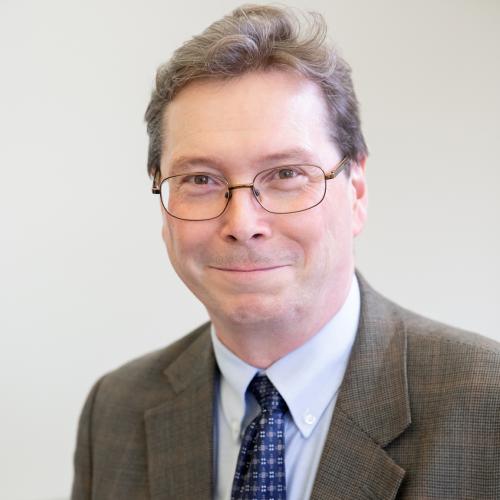
Stephen Downie
J. Stephen Downie, Professor, Executive Associate Dean, and Co-Director of the HathiTrust Research Center

J. Stephen Downie, professor and associate dean for research, was quoted in the article "When computers listen to music, what do they hear?" that was published in the Boston Globe on Sunday, July 8, 2012. The article covers work being done in computational musicology and music information retrieval. Downie, an expert in music information retrieval, is the principal investigator for the project Structural Analysis of Large Amounts of Music Information, or SALAMI. His co-PIs are David De Roure from the University of Oxford and Ichiro Fujinaga from McGill University. He is also the director for The International Music Information Retrieval Systems Evaluation Laboratory (IMIRSEL) at GSLIS. IMIRSEL is the principal organizer of MIREX 2012, an annual evaluation campaign for music information retrieval algorithms.

From the article:

One of the groups working on making computers better at listening is an academic organization called SALAMI, which helps digital musicologists and programmers test new analytical tools, and holds a contest every year to see who can come up with the most sensitive audio software. Another is Somerville-based Echo Nest, which formed in 2005 as an outgrowth of a project at the MIT Media Lab. It has since built a business out of helping companies like MTV and Clear Channel build music recommendation tools and online radio stations. At Echo Nest, computer engineers develop algorithms that can take any mp3 file and read the raw signal for so-called “psycho-acoustic attributes” that emerge from a song’s dominant melody, tempo, rhythm, and harmonic structure.

As excited as digital musicologists are to have this high-altitude approach within reach, they tend to feel that more traditional colleagues disapprove of their replacing careful, sensitive listening with statistics. “I think arts and humanities scholars, especially in the postmodern age, don’t like to talk in big sweeping generalities,” said Huron. “We like to emphasize the individual artist, and focus on what’s unique about a particular work of art. And we take a kind of pride in being the most sensitive, the most observant. I think for many scholars, numerical methods are antithetical to the spirit of the humanities.”

“We’re not really here to replace musicologists—I want to stress that, because our old school musicologists get upset by this,” said J. Stephen Downie, a professor at the University of Illinois who serves as a principal investigator on SALAMI. “But we can change the kinds of questions they can answer. No musicologist could ever listen to 20,000 hours of music. We can get a machine to do that, and find connections that they would miss.”

Tags:
Updated on
Backto the news archive

Related News

Chan’s "Predatory Data" named a 2026 PROSE Award finalist

Professor Anita Say Chan's book Predatory Data: Eugenics in Big Tech and Our Fight for an Independent Future (University of California Press, 2025) has been named a finalist in the Computing and Information Sciences Category of the 2026 PROSE Awards. The annual awards bestowed by the Association of American Publishers recognize the very best in professional and scholarly publishing and celebrate works that have made significant advancements in their respective fields of study.

Anita Say Chan

He inducted into Sigma Xi

Professor Jingrui He has been inducted into Sigma Xi, The Scientific Research Honor Society. Sigma Xi is the international honor society of science and engineering and one of the oldest and largest scientific organizations in the world, boasting a history of service to science and society spanning over 125 years. It has a multidisciplinary membership of scientists, engineers, and scholars, and Sigma Xi chapters can be found in universities and colleges, government laboratories, and commercial research centers.

Jingrui He

Hassan and Bashir receive distinguished paper award

A paper co-authored by PhD student Muhammad Hassan and Associate Professor Masooda Bashir received the Distinguished Paper Award at the Workshop on Security and Privacy in Standardized IoT, which was held last month in San Diego, California, in conjunction with the Network and Distributed System Security (NDSS) Symposium 2026. 

iSchool researchers to present work at Technocracy Conference

This week, iSchool PhD students and faculty will present their research at the Technocracy Conference. Hosted by the Unit for Criticism and Interpretive Theory at the University of Illinois on March 5–6, the conference will begin with a panel of graduate student papers and continue the following day with invited speakers and a keynote. All events will take place at the Levis Faculty Center on the Urbana campus. 

New multi-institutional project to use AI to represent past historical periods

A new project led by a team of researchers from four universities aims to create and evaluate language models that represent past historical periods. The project, "Artificial Intelligence for Cultural and Historical Reasoning," was recently selected for a 2025 Humanities and AI Virtual Institute (HAVI) award from Schmidt Sciences. The $800,000 grant will be split among four institutions: Cornell University, the University of Illinois Urbana-Champaign, The University of British Columbia, and McGill University. Professor Ted Underwood will serve as the principal investigator for the portion of the project at Illinois.

Ted Underwood

School of Information Sciences

501 E. Daniel St.

MC-493

Champaign, IL

61820-6211

Voice: (217) 333-3280

Email: ischool@illinois.edu

Back to top