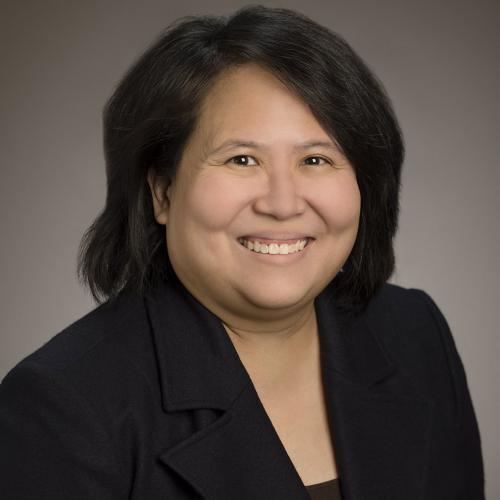
Editor’s note: People are being asked to change their behavior to help contain the spread of COVID-19. Dean Eunice E. Santos and PhD students Suresh Subramanian and Vairavan Murugappan studied the 2009 H1N1 pandemic and the social phenomena and events that influenced whether people in Mexico decided to cross the border into the U.S. at various times during the outbreak. Their work provides insights that can help public health officials plan for events such as the current COVID-19 pandemic. They talked with News Bureau arts and humanities editor Jodi Heckel.
Why is understanding people's beliefs and cultural, economic and political factors important to making decisions on public health policies?
Eunice E. Santos: With these types of diseases, understanding people's interactions is important in order to examine the spread of the disease. This includes identifying key behaviors and the different social and cultural factors involved. Our work considers what different groups believe, how safe they feel, and how different beliefs spread. We also consider how much trust people have in both the government and the health care system–which plays a significant role in how people behave and react, and in turn shapes how communities and organizations behave and react.
Suresh Subramanian: Gaining insights into these behaviors helps policymakers identify the root causes that triggered these behaviors and mitigate them in the future. Furthermore, we can learn how the behavior dynamics will evolve and answer important questions such as whether certain demographics of the population are more inclined to follow the advisories from health agencies. What would prompt more individuals to adhere or not adhere to such advisories?
With COVID-19, once we have enough data, we can look at how social-distancing behavior has been implemented. We can establish how socioeconomic conditions drive the adherence to health guidelines and how in turn they will affect the overall outcome.
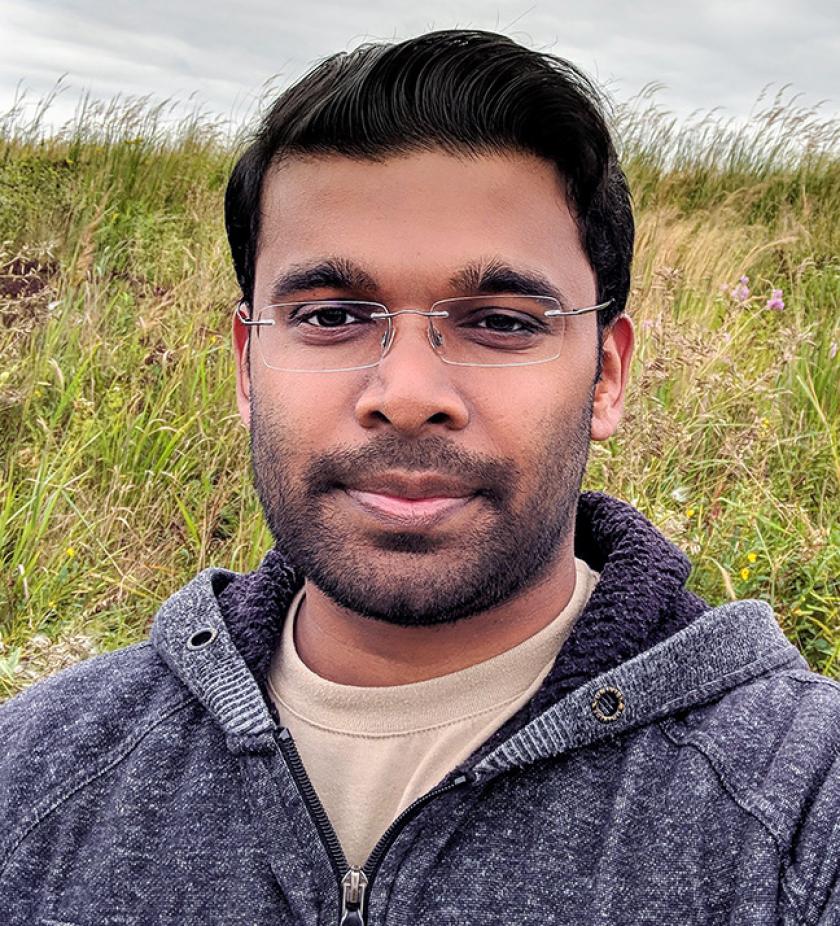
Why is it so difficult to predict behavior with a computer model, and how does your modeling of behavior help better predict the effect of a policy or event?
Santos: Obviously there is a huge focus on the different ways a disease can spread and in understanding transmission rates. That is very critical in understanding the underlying disease itself. There are well-established research approaches to modeling that.
When it comes to behavior in human beings, it's very difficult to try to model this effectively because human beings are incredibly complex, and when they interact, it becomes even more complex. To be effective in providing insights and predictions, we model the dynamism and evolution of the ongoing situation, as well as the ability of individuals and groups to adapt.
Subramanian: A major portion of the behavior-based studies are survey-based approaches that try to come up with statistical values of how behavior changes in a given circumstance, or they use game theoretic models and see how behavior evolves in social games in a confined setting. Although these works provide key insights, it is challenging to directly extend them to model real-world scenarios.
Santos: When there is a situation that is quickly evolving and there is a need to collect information and data, there is going to be a lot of incomplete, contradictory, and flat-out wrong information, and you won't be able to identify which information are in these categories at the time. In our work, we are able to deal with that noise and uncertainty.
One of the strengths of our approaches is that we are able to take the wealth of data from a variety of sources, knowledge from the medical community and information from subject matter experts and use them in our models.
We are using a combination of hard data as well as social and cultural theories that we can represent computationally to create models and simulations. We can test out different health policies and determine how potentially effective they could be and perform an analysis of which drivers produced a specific outcome. We can understand how likely a health policy will be effective or not effective, and why.
How can this help officials in dealing with the COVID-19 pandemic and predicting how fast the disease will spread and the numbers who might be infected?
Vairavan Murugappan: One of the main foci of current modeling efforts in COVID-19 is trying to predict how the infection is going to spread in the near future. In addition to this prediction, we can also use our model to study the effectiveness of new policies and behavioral changes. Also, we want to be prepared to tackle future pandemics more efficiently. The explanatory capability of our model will help with evaluating various model assumptions as well as behavioral and policy changes.