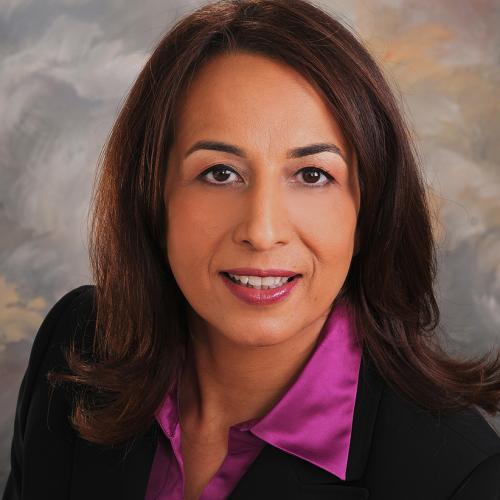
Library professionals have long held sacred the right of patrons to privacy while using library facilities, and the privilege is explicitly addressed in the American Library Association's Bill of Rights. The advent of the digital age, however, has complicated libraries' efforts to secure and protect privacy, Associate Professor Masooda Bashir has learned.
"Public libraries are essential to our everyday lives, especially to individuals in lower socio-economic and underrepresented groups in our society," she said. "They go to libraries to get day-to-day things done, like employment applications and homework. Libraries handle a lot of sensitive, important information."
In the first study to discover how public libraries protect that information, Bashir and her research group gathered data from over 800 diverse public libraries across the nation. Surveyed electronically in 2020, respondents ranged from library administrators to librarians and staff to information technology professionals working in libraries. The Institute of Museum and Library Services provided a $150,000 grant to support the project, which ran from September 2020 to February 2023.
While all the respondents surveyed recognized the need for privacy protection, practices to meet that need varied greatly, Bashir discovered.
"Based on the feedback received from survey respondents, most public libraries identified technical knowledge as their primary area of weakness. Survey respondents emphasized that although privacy protections were implemented in the libraries' daily operations, they were concerned over the lack of control in the digital realm," she said. "In today's digital age, the responsibility to safeguard patron privacy becomes notably more challenging, and respondents expressed concerns about libraries lacking the necessary tools, budget, and expertise to fulfill this mandate."
Reasons that survey respondents cited for these challenges included a lack of training for staff members, limited knowledge of technology to recognize possible risks, and/or budget restraints.
Bashir said that she looks forward to future research opportunities that will allow her group to collaborate with public libraries that serve rural and under-represented communities, to enhance their patron privacy protections. Improvements could include creating tools to automate privacy vulnerability assessment and privacy protections in library systems and websites as well as offering suggestions for better policies.
"The goal is to provide practical tools that can improve patron privacy in public libraries, especially to those that lack such resources and expertise," she said.