The AI Disruption Speaker Series: Sarah Lawsky
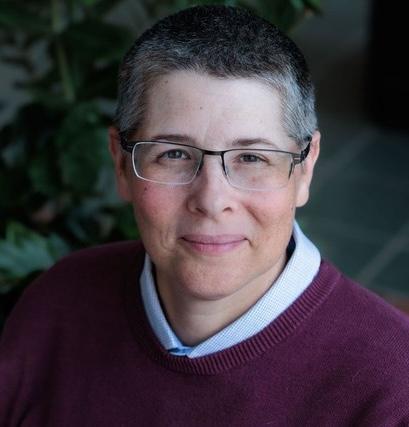
Sarah Lawsky will present "Computational Law, Transparency, and Accountability: The Case of Direct File."
Sarah B. Lawsky, the L.B. Lall and Sumitra Devi Lall Professor of Law at the University of Illinois College of Law, studies tax law, computational law, and the intersection of the two. Her recent work focuses on the formalization of tax law. Professor Lawsky’s research arguing for using a particular nonstandard logic to formalize tax law is the conceptual foundation for the domain-specific programming language Catala, which is the project of a team of computer scientists and lawyers. Before joining the University of Illinois, Professor Lawsky taught at Northwestern Pritzker School of Law, UC Irvine School of Law, and George Washington University Law School. Before entering academia, she worked as a tax lawyer for large law firms. For more information, visit the personal website of Professor Lawsky: https://www.sarahlawsky.org/
Abstract:
What role can, or should, tools based on large language models play in the administration and formalization of law? To begin to wrestle with that question, this talk will look at a project that uses no such tools at all: Direct File. Direct File was a program created by the United States government that allowed some taxpayers to file their federal income tax returns online, for free. In 2025, the Internal Revenue Service publicly posted almost the entire computer code underlying the Direct File program. The Direct File code shows how electronic filing can, contrary to common wisdom, increase transparency. The computer code itself, if released publicly, creates transparency by revealing behind-the-scenes choices that are merely implicit in forms, instructions, and other informal guidance. And some computer code for electronic filing, such as the code for Direct File, allows visualization and explanatory tools to be built on top of that code, making the application of the law and various administrative choices more transparent even to those who are not comfortable reading computer code. The existence, transparency, and legibility of Direct File code and its outputs poses a challenge to large language models in the area of law administration; the presentation is thus intended to begin a conversation among those present about in what ways, or whether, the administration of law should undergo an "AI disruption."
About the speaker series:
The CIRSS Speaker Series continues in Fall on the new theme of “The AI Disruption.” Our speakers will discuss how recent advances in AI have reshaped their research — what has been made easier and what has become more difficult — and reflect upon its broader disruptive impact on society.
We meet most Wednesdays, 9am-10am Central time, in Zoom. Everyone is welcome to attend. More information, including upcoming speaker schedule and links to recordings, is available on the series website. For weekly updates on upcoming talks, subscribe to our CIRSS Seminars mailing list. Our Spring 2026 series is led by Yuanxi Fu and Timothy McPhillips, and supported by the Center for Informatics Research in Science and Scholarship (CIRSS) and the School of Information Sciences at the University of Illinois at Urbana-Champaign.
This event is sponsored by Center for Informatics Research in Science and Scholarship