Mengfei Lan's Dissertation Defense
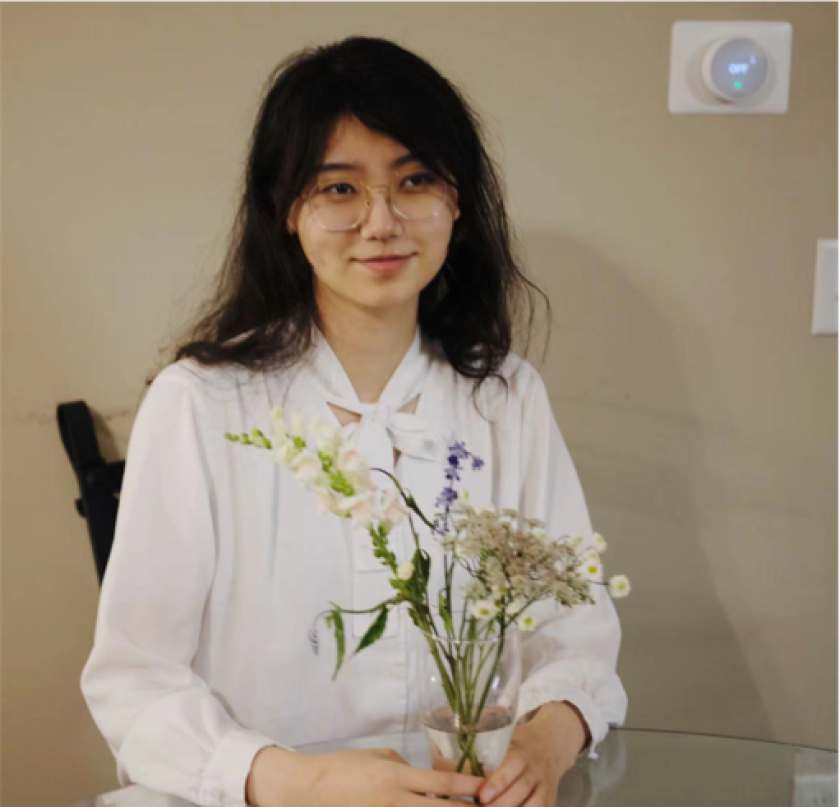
PhD candidate Mengfei Lan will present her dissertation titled "Large Language Models for Argument Mining in Biomedical Literature." Her final examination committee includes Associate Professor Halil Kilicoglu (chair), Professor Catherine Blake, Associate Professor Vetle Torvik, and Assistant Professor Haohan Wang.
Abstract
Biomedical literature plays a crucial role for scientific knowledge acquisition and generation. However, the vast volume of biomedical literature presents significant challenges in efficiently identify, interpret, and synthesize task-relevant knowledge. Biomedical natural language processing (BioNLP) techniques, which facilitate quick processing of large-scale biomedical texts, have become increasingly important to address this challenge. Most existing BioNLP works focus on extracting biomedical knowledge in the form of named entities or entity relationships from literature, but overlooking the argument roles—such as hypothesis and novel findings—played by the entities and their relationships in the paper. These argument roles could influence the reliability and interpretation of extraction (e.g. hypothesis). Therefore, biomedical argument mining, as the process of automatic identification and analysis of arguments within biomedical literature (e.g., claims, evidence, reasoning processes, study limitations, and contradictory evidence), should receive more attention to advance knowledge interpretation and extraction.
Recent advancements in large language models (LLMs) have opened opportunities for biomedical argument mining with their strong abilities in understanding complex semantic dependencies from text. This thesis explores how to leverage LLMs to advance biomedical argument mining, with the goal of improving automated extraction and interpretation of arguments from biomedical scientific texts. Specifically, this dissertation addresses three major challenges in biomedical argument mining. First, it explores LLM-supported biomedical argument structure extraction, focusing on improving rhetorical role identification within biomedical abstracts. Second, it investigates the automated classification of self-acknowledged limitations (SALs) in biomedical publications using supervised models trained on LLM-augmented datasets, enabling understanding of contextual factors that influence the certainty and generalizability of biomedical claims. Thirdly, it explores conflicting evidence detection and interpretation across biomedical publications by leveraging LLMs to identify conflicting claims and explain the differences in contextual factors, such as population, dosage, and outcome measures, that may lead to conflicting findings.
Collectively, this dissertation demonstrates how LLMs can support deeper contextual reasoning and argument understanding in biomedical literature. The findings contribute to advancing automated biomedical knowledge interpretation and provide new directions for scalable evidence synthesis, decision making, and trustworthy biomedical AI systems.