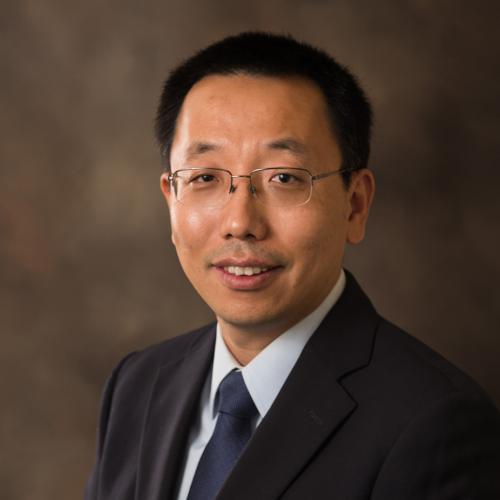
Professor and Associate Dean for Research Dong Wang and students from his Social Sensing and Intelligence Lab are presenting two papers on information integrity at the 2026 ACM Conference on Human-AI Complementarity and Alignment (HCOMP 2026). The conference takes place Sept. 27–30 in Alexandria, Virginia.
In the first paper, PhD student Ruichen Yao and Wang present an AI approach that checks the accuracy of social media posts during disasters such as hurricanes and wildfires. The approach then ranks inaccurate claims by how likely people are to believe them and how much harm they could cause. This ranking can help emergency agencies and fact-checkers decide what to address first.
In the second paper, Siebel School of Computing and Data Science PhD student Mung Yao Jia and Wang introduce a public dataset that shows how people decide whether to trust health and disaster information they see online. It also tracks how those decisions shape their actions, both online and in daily life, and affect their communities. The team found that today's AI models have difficulty predicting how people will behave when they are unsure what to believe.
Wang also appears on a panel about the closing of Amazon Mechanical Turk (MTurk), a platform that has shaped crowdsourcing research for nearly two decades. Panelists will reflect on the platform's legacy, discuss what its closure means for researchers and online workers, and consider the future of crowd work and human participation in an era increasingly shaped by AI.
Also represented at the conference are PhD student Theodore Ledford, whose poster "Should an Expert Specialize, Synthesize, or Speculate? Discovering Latent Clusters and Ensemble Probabilities through Bandit-Arm Bid Search and Arbitrage" appears in the poster session; and Affiliate Assistant Professor Koustuv Saha, a co-author on "When AI Says ‘I have been in similar situations': Synthetic Lived Experience in Peer-like Caregiver Support."