Morgan Lundy's Dissertation Defense
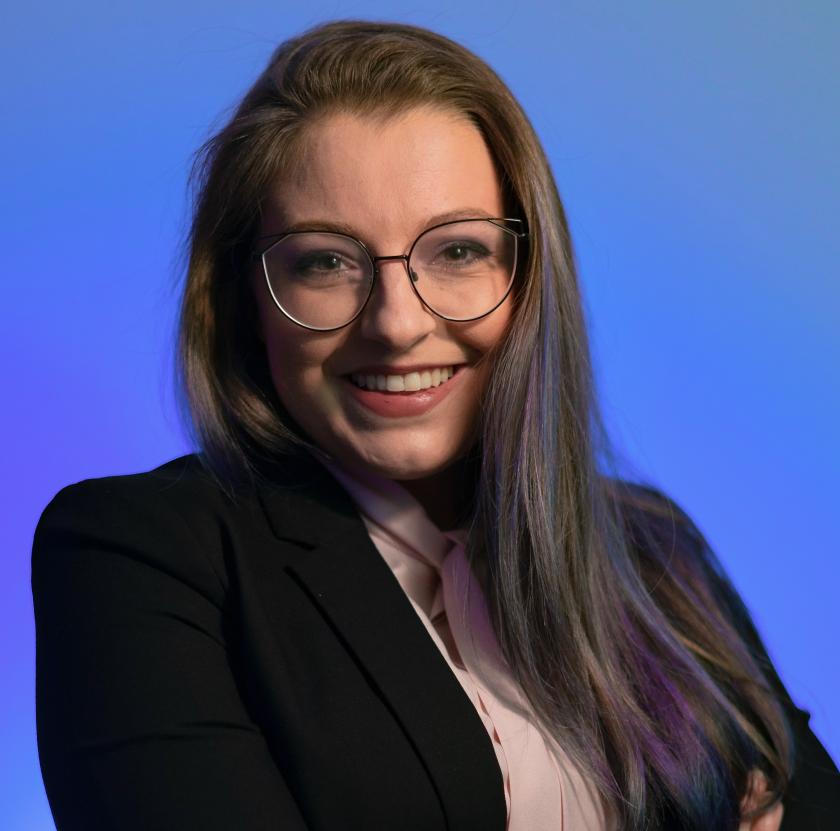
PhD candidate Morgan Lundy will present their dissertation defense, ""Have A Flare With Me!”: A Collaborative Grounded Theory Approach To Understanding Disability Storytelling On TikTok." Lundy's dissertation committee includes Associate Professor Jessie Chin, Chair, University of Illinois at Urbana-Champaign; Associate Professor Madelyn Sanfilippo, Committee Member, University of Illinois at Urbana-Champaign; Professor Kathleen McDowell, Committee Member, University of Illinois at Urbana-Champaign; Associate Professor Kaitlin Costello, External Committee Member, Rutgers University; and Professor Ted Underwood, Committee Member, University of Illinois Urbana-Champaign.
Zoom info:
Meeting ID: 812 5193 2470
Password: 245932
Abstract
Central sensitivity syndromes (CSSs) are a family of incompletely understood chronic illnesses that share a common central mechanism and many symptoms. People with CSSs are utilizing TikTok to create online health communities (OHCs) for mutual support and to create and share health information. This dissertation asked how and why people with CSSs use TikTok for storytelling, and for what motivations, purposes, and effects; it also explores community on TikTok, including formation of self-titled algorithmically-influenced online health communities, their boundaries, norms, and how these AIOHCs differ from earlier OHC research.
This dissertation takes a critical disability studies approach, with emphasis on first person stories (disabled people as experts), use of constructivist grounded theory methods (Charmaz, 2006), and presentation of disabled expertise on both the physical and social challenges of disability. A process of algorithm training identified 15 most resonant hashtags, and 10 videos per hashtag were purposefully sampled. Their top-20 threaded comments collected. Theoretical coding used constant comparison to analyze these videos, comments, and the results from 11 interviews with people with CSSs who use TikTok for disability storytelling.
This dissertation presents a variant on the S-DIKW model for TikTok disability storytelling purposes, This dissertation then presents an adapted model of the basic storytelling triangle (McDowell) to illustrate how these storytelling processes happen iteratively and collectively on TikTok. This dissertation then shares two different models for health community formation on TikTok, based on interviewee perceptions and visualization activities. Creators described multiple layers of community. The model of algorithmically-influenced online health community (AIOHC) formation, in contrast, emphasized the way the primacy of the algorithmic ranking logic of the platform on the FYP allows for user serendipity and “stumbling upon” community. These results have implications for TikTok research, evolving OHC research, and wider research into embodied, collective, affective, and information creation behaviors. A focus on practical results for disabled people, like the S-DIKW (TT) focus on concrete abilities, is furthered by explaining how these results could be further explored using creative participatory methods.
Questions? Contact Morgan Lundy.