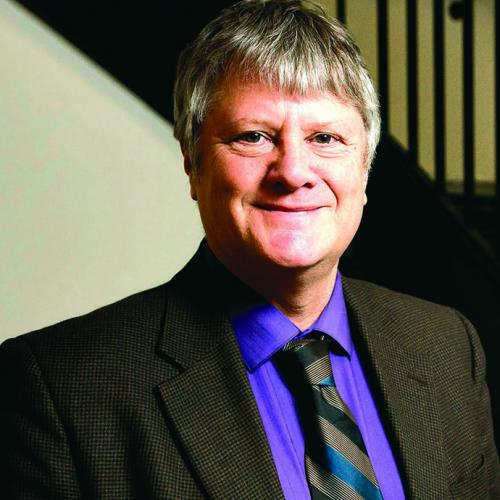
Brant Houston, GSLIS-affiliated faculty member and professor of journalism in the College of Media, is a 2012-2013 recipient of the Campus Award for Excellence in Public Engagement (CAEPE). The awards, given annually by the Office of Public Engagement, recognize individuals and teams who engage the public to address critical societal issues.
Houston holds the prestigious John S. and James L. Knight Foundation Chair in Investigative and Enterprise Reporting at the University of Illinois. He currently teaches investigative and advanced reporting in the Department of Journalism. He serves as chair of the board of directors of the Investigative News Network, a coalition of nonprofit journalism centers, and is a coordinator of the Global Investigative Journalism Network, which he helped create in the year 2000.
Houston is co-founder and director of the CU-CitizenAccess project, an online news and information service devoted to investigative and enterprise coverage of social, justice, and economic issues in East Central Illinois. Launched in January 2010, the award-winning project gives a voice to marginalized and underrepresented groups in the Champaign-Urbana area by engaging various media outlets, community organizations, civic leaders, and journalists to share information and address community issues.
“The project’s collaborations with other media, civic groups, and citizens have resulted in a robust and ongoing multi-media newsroom and community engagement effort that provides vital public service journalism, rich content for Web sites, and forums for public discussion of issues crucial to the community,” said Rich Martin, nominator and head of the Department of Journalism. “In response, faculty and students are learning to use new technologies and techniques that will shape the journalism of the future.”
Much of the project’s success relies on the extensive fieldwork and reporting conducted by Houston and his team in the local area. Utilizing a series of GSLIS-supported community computer labs, the project offers classes and tutorials to citizens in diverse communities such as the Shadow Wood mobile home park, Bristol Park, Salem Baptist Church, and Dobbin Downs.
In its first two years, CU-CitizenAccess worked in 11 specific neighborhoods, holding over a dozen meetings with community leaders and organizations to open up new points of contact between these groups and the media—including Illinois Public Media/WILL and the News-Gazette—as well as developing strategies to encourage civic engagement and influence public policy. Most recently, the project collaborated with Hoy Chicago, the Spanish-language newspaper of the Chicago Tribune, to produce a 16-page bilingual report that examined the changing demographics of East Central Illinois and revealed the stories of various ethnic groups as they seek to become integral parts of their communities.
“It is also worth noting that the spirit of engagement internalized by Brant’s students continues to have impact through their professional work in the media organizations they join after graduation,” said Christopher Benson, associate dean of the College of Media, “In this way, he sets in motion a wide ripple effect, greatly expanding the potential impact of his work here in Central Illinois.”
Houston is one of three faculty/staff recipients of this year’s CAEPE award. Martin Wolske, GSLIS senior research scientist, with whom Houston has worked closely, and Madhu Viswanathan, professor in the College of Business, were named as well. The Office of Public Engagement also honored student Deirdre Lanesskog of the School of Social Work and the research team Scientific Animations Without Borders with the award.
The CAEPE winners will be honored at a reception on April 30, 2013.