Since its debut in 1947, the iSchool's The Bulletin of the Center for Children's Books has been one of the nation's leading children's book review journals. Published eleven times a year, The Bulletin provides concise summaries and critical evaluation of children's books to aid public and school librarians tasked with building children’s collections.
The Bulletin has long stood at the nucleus of the Center for Children's Books (CCB), and as the CCB approached its seventy-fifth anniversary, director Sara L. Schwebel sought ways to highlight the journal's longitudinal impact. Schwebel and iSchool colleagues Glen Layne-Worthey, Suzan Alteri, and Elizabeth Hoiem created a planning team, and together they tapped Rebekah Fitzsimmons of Carnegie Mellon, who joined the CCB project to mine the archived issues of The Bulletin as an iSchool research fellow.
"There is no significant scholarship on children's book reviewing and the way reviews and reviewers helped shape the reception and prizing of individual titles—and even what publishers deemed viable for the market," said Schwebel. "Using The Bulletin as a case study, we're seeking to better understand the role book reviewing—and the very small number of people who wrote reviews—played in the development of US children's literature."
With this goal in place, the next step was to figure out how to extract and visualize that data.
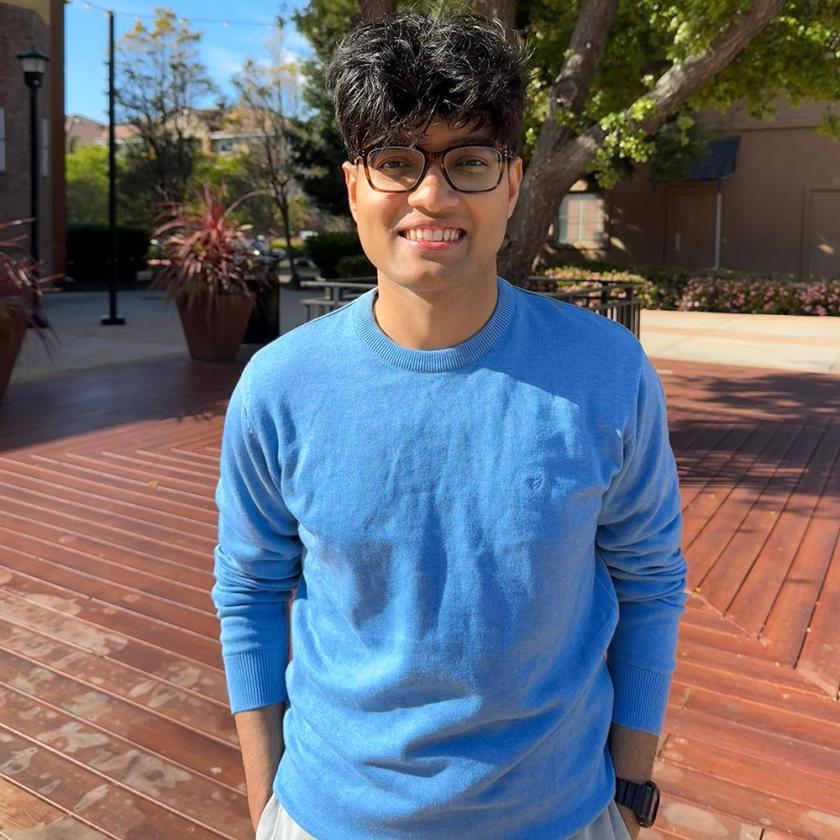
Enter MSIM student Tan Debnath, whose interests span data mining, statistical modeling, text mining, and digital humanities. Datafying The Bulletin brought together these interests, making Debnath the perfect fit as the research assistant for this project.
"Having Tan join the project was exciting because it brought the CCB and the MSIM program together," said Schwebel. "The CCB has served as a resource for the education, professionalization, and research interests of students in the MSLIS program. We are delighted to contribute to the MSIM program as well, and we are unquestionably enriched by the collaboration."
Debnath's work on the project included harvesting, cleaning, and structuring the metadata extracted from the previously digitized back issues of The Bulletin.
Debnath explored a range of data curation approaches—including pattern-recognition algorithms, machine learning, and large language models—each with varying levels of success. He said that decades of editorial changes prevented a truly automated process and required human intervention to overcome these challenges. He was especially intrigued by the evolution of formatting and editorial practices and how this lack of standardization confused his models.
"Earlier issues featured simpler layouts, with recommended grade levels separated by indentation, while later editions adopted more complex designs with small caps, italics, and white space—formats that were visually intuitive for readers but relatively challenging for computational processing," he said.
While datafying the seventy-five years' worth of issues is ongoing, Debnath's year-long contribution to the project is undeniable. He credits the iSchool for preparing him to take on this project with confidence.
"My coursework deepened my understanding of techniques for data curation, extraction, and structuring—skills that proved critical for creating a dataset from The Bulletin's complex and inconsistent formats," he said. "The program's strong emphasis on practical, hands-on learning equipped me to approach this real-world challenge with both confidence and precision."
Debnath presented the project in a research poster, "Datafying 75 years of Book Reviews from The Bulletin of the Center for Children's Books," during the 2024 iSchool Research Showcase. The poster won Best Poster Award out of 35 entries, and a revised version will be presented at the international Digital Humanities 2025 conference in Lisbon, Portugal, this summer. In addition to Debnath, poster co-authors include Schwebel, Fitzsimmons, Alteri, and Layne-Worthey.
While Schwebel heaps praise on Debnath ("he's FANTASTIC"), the feeling is mutual. According to Debnath, the friendships he developed with his colleagues helped him transition to life in the US as an international student.
"They welcomed me warmly, and their support has made all the difference. Even outside of work, their friendship and conversations bring me a sense of belonging and joy," he said. "In many ways, this mirrors what the iSchool truly represents—a vibrant, inclusive community that feels like a home away from home."