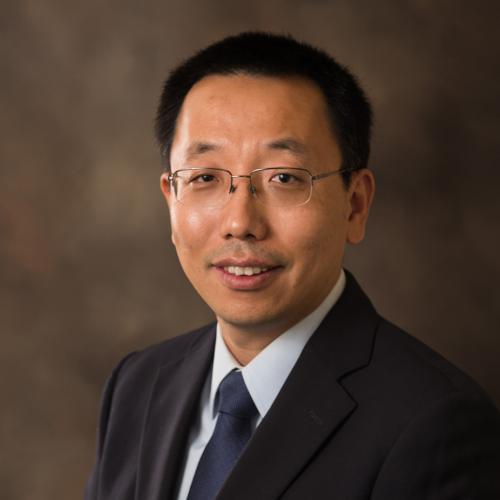
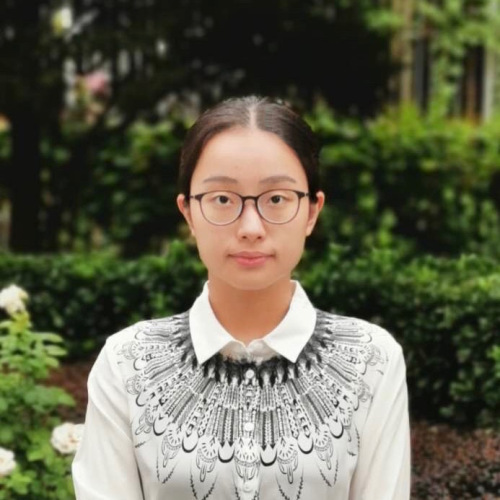
Professor and Associate Dean for Research Dong Wang and PhD student Ruohan Zong will present their research at the 19th ACM International Conference on Web Search and Data Mining (WSDM 26), which will be held from February 22–26 in Boise, Idaho. WSDM is a premier international conference in web search, data mining, and AI, known for its highly selective acceptance rates. This year, the acceptance rate for the main track of the conference was only 16 percent.
Wong and Zong will present "Mixture of Adaptive Retrieval Experts for Veracity Assessment in the Human-LLM Mixed Generation Paradigm," which they coauthored with Informatics PhD student Zhenrui Yue and Yang Zhang, assistant professor of computer science and software engineering at Miami University. In this paper, the researchers propose a new system, MoARE (Mixture of Adaptive Retrieval Experts), to make AI-driven content evaluation more flexible, accurate, and practical.
"Unlike traditional methods that use a single strategy for every piece of content, MoARE intelligently decides when to gather supporting evidence and how much to retrieve for each case," Wang said. "It uses a smart decision-making network trained to balance accuracy and efficiency, ensuring strong assessments without unnecessary time or computational cost. MoARE also does this without needing to know whether the content was written by a human or generated by AI."
In the paper, the research team describes how, in tests on diverse datasets containing both human- and AI-generated content, MoARE was both more accurate and more efficient than leading existing systems.
"This kind of adaptable technology can support trusted information discovery across many fields—from education and journalism to research platforms and digital tools — where understanding the strength of content quickly and reliably is increasingly important," Wang added.
The primary research focus of the Social Sensing and Intelligence Lab lies in the emerging area of human-centered AI, AI for social good, and cyber-physical systems in social spaces. The lab develops interdisciplinary theories, techniques, and tools for fundamentally understanding, modeling, and evaluating human-centered computing and information (HCCI) systems, and for accurately reconstructing the correct "state of the world," both physical and social.