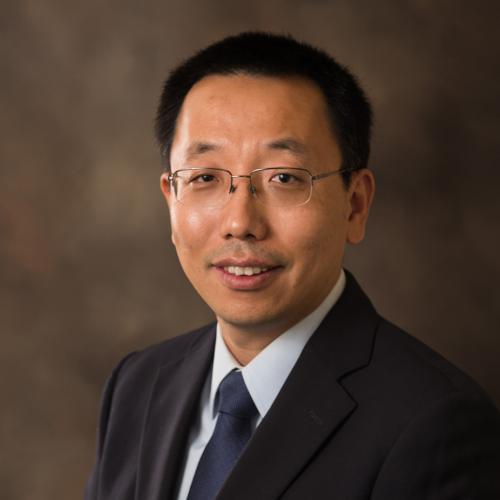

Professor Dong Wang and PhD student Ruichen Yao will present their research at the International AAAI Conference on Web and Social Media (ICWSM) 2026, which will take place May 27–29 in Los Angeles, bringing together researchers from around the world to study the intersection of social media, society, and technology. The conference is widely recognized as a premier venue for computational social science and social computing, with a highly selective acceptance process.
Wang and his PhD student Ruichen Yao will present two papers at this year's conference, both focused on using social media data to better understand natural disasters and their effects on communities.
In the conference's dataset track, Wang and Yao will present "MASH: A Multiplatform and Multimodal Annotated Dataset for Societal Impact of Hurricane." The project introduces MASH, a new large-scale research dataset built from social media posts related to hurricanes that affected the United States in 2024. Unlike earlier datasets that often focus on a single platform or historical events, MASH brings together content from multiple major platforms, including Reddit, TikTok, and YouTube, to capture a broader picture of how people share information and experiences during disasters. The dataset also incorporates text, images, and videos. Each post is annotated across three dimensions: humanitarian needs, social bias, and information integrity. The dataset is designed to support future research on disaster response, public sentiment, policy planning, and the role of online information during emergencies.
In the conference's main research track, Wang and Yao will present "DisImpact: Quantifying the Physi-Social Impact of Natural Disasters Through Social Media." This work introduces a new framework for measuring both the physical and social impacts of disasters within a unified index. It captures physical effects such as wildfire spread or infrastructure damage, as well as social effects such as public concern, disruption, and community response. Traditional disaster assessment often depends on surveys or government reports that may take days or weeks to compile. DisImpact instead analyzes social media posts, including text, images, and videos, to provide a more timely and comprehensive understanding of disaster impacts as they unfold. To evaluate the framework, the researchers compared their social media–based measurements with authoritative sources such as Federal Emergency Management Agency assistance records and NASA FIRMS wildfire detection data. The study found strong alignment between the social media signals and observed disaster conditions.