Through digital technologies like MP3, JPEG, and MOV formats, sounds and images can be shared and sent around the world.
Imagine if we could do the same thing for smells.
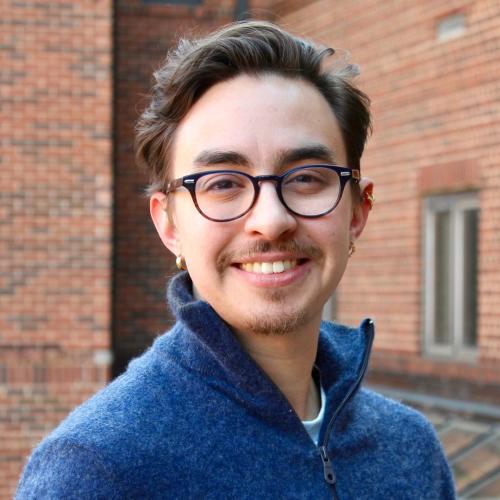
PhD student Evan Guerra is trying to find a way, turning unstructured smell descriptions based on free-text human responses into structured text computers can understand. He is also working to predict the smell of molecules from their structure. Both projects are key tasks on the way to enable computer understanding of smell.
"Olfaction is an area we know so little about, and there is so much to discover," he said. Information scientists, he adds, can benefit this area of study, being "accustomed to dealing with unstructured, subjective, and messy information and turning it into something structured, accessible, and understandable."
Digital renderings of smells have numerous applications. For example, they could help companies tailor food products to better meet consumer needs and preferences, design new perfume ingredients, or detect neurodegenerative disease based on a person's inability to smell odors.
But determining how best to convert smells into code takes a lot of legwork. Working in the lab of Joel Mainland, faculty member at the Monell Chemical Senses Center, which studies smell and taste, Guerra recruited more than 15 study participants to describe the smells of 48 molecules, including linalool, which he said smells like strawberry, and (-)-trans-Quercus lactone, which he said smells like aged whiskey, hence its synonym, (-)-trans-Whiskey lactone.
For each molecule, he asked participants to select adjectives from a list of 51, including "medicinal," "phenolic," "floral," "plastic," "ozone," and "animal." Guerra described acetic acid, the active ingredient in vinegar, as sharp, sour, and ammonia. He described menthol, an extract of the mint plant, as medicinal and cooling. Eventually, molecules and their smell profiles will correspond to code; think of them as smell pixels.
Guerra has also worked on the extraction and analysis of chemosensory information from online reviews of food products and of restaurants, analyzing how people perceive sweetness of products across the globe and how people regard restaurants across cuisine types.
While Guerra follows his nose in his iSchool research, he ended up in this area of study by following his heart. After completing a bachelor's degree in computer science at The Evergreen State University in 2018, he ran a makerspace at the Free Library of Philadelphia until funding was cut in 2020 at the onset of the COVID-19 pandemic.
With an academic computer background and some library work under his belt, he looked for jobs as a data analyst and found a position at Monell. At the same time, he began a master's degree in library and information science at Clarion University of Pennsylvania, now PennWest Clarion. In the process, he said he "fell in love with science and fell in love with smell."
Chemosensory perception was only at the periphery of Associate Professor Halil Kilicoglu's research when he interviewed Guerra for the iSchool's doctoral program. But he was struck by Guerra’s background in library science and his interest in applying natural language processing and AI to better understand smell and taste. Kilicoglu, whose expertise lies in natural language processing for biomedical applications, said Guerra's work "felt like the kind of interdisciplinary direction that could grow into a significant research program" and recruited him to his lab.
Guerra's work in chemosensory perception has resulted in several publications, at least one fun YouTube video, and the 2026 Lucille M. Wert Scholar Award from the American Chemical Society’s Division of Chemical Information. He is the first Illinois student to win the award, which was created to recognize chemists pursuing graduate studies in information, library, or computer science, leading to a career in chemical information.
Ultimately, Guerra, a fourth-year PhD student, is undecided between academia and industry. "I can see myself working in the flavor, fragrance, or chemical industry," he said, "or eventually as a professor leading a lab working on chemosensory information! We will see where my heart takes me."
And he'll keep following his nose.