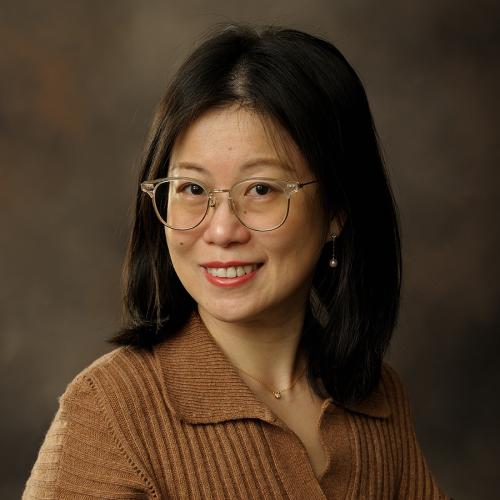
Professor Jingrui He has received a grant to develop a suite of models and tools to help farmers better anticipate extreme weather events and mitigate damage to their crops.
The project, "Extreme Weather Event Modeling for Precision Agriculture," is funded by the National Institute of Food and Agriculture (NIFA), part of the US Department of Agriculture, with a four-year, $1 million grant. Professors Hanghang Tong of the Siebel School of Computing and Data Science and Elizabeth Ainsworth of the School of Integrative Biology serve as co-PIs.
While science has increased agricultural crop yields, extreme weather, in Illinois and elsewhere, can negate those gains. He's project would develop what are called super intelligence models, also known as artificial superintelligence models, that can use numerous data systems to predict extreme weather events such as flash droughts and derechos days and sometimes a month sooner than current systems.
He's model would incorporate multiple data sources including remote sensing data; atmospheric, land and oceanic weather variables; and output from existing weather models. Building on that knowledge, the system would be able to make recommendations for specific farms based on their location and topography to optimize their crop production. Once complete, the software tools would be publicly available.
"We hope to advance state-of-the-art techniques for precision agriculture in response to extreme weather events," He said. "This new framework can optimize farmers’ early crop yield indicators, leading to higher yield at the end of the growing season."