School of Information Sciences

New book provides roadmap for designing human-centered AI systems

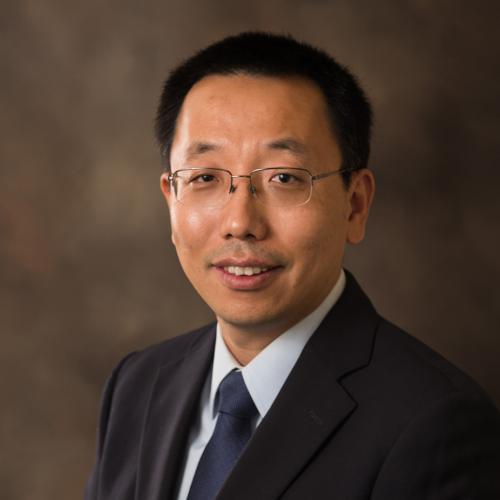
Dong Wang
Dong Wang, Professor and Associate Dean for Research

Professor Dong Wang is the lead author of a book that offers a new perspective on human-centered AI design and human–AI collective intelligence. Social Intelligence: The New Frontier of Integrating Human Intelligence and Artificial Intelligence in Social Space, which was recently published by Springer Nature, is co-authored by Lanyu Shang (PhD '24) of Loyola Marymount University and Yang Zhang of Miami University.

With the rapid advancement of AI and online collaboration platforms—such as social media and crowdsourcing—researchers are increasingly studying how artificial and human intelligence can be integrated. This new field, social intelligence, explores the collective intelligence from both humans and machines by understanding their complementary strengths and interactions.

In Social Intelligence, the authors present a set of novel human-centered AI techniques to address the challenges of social intelligence applications, including multimodal approaches, robust and generalizable frameworks, and socially empowered explainable AI designs. They present these applications in real-world scenarios, including social media misbehavior identification and mitigation, multimodal truth discovery, explainable AI and machine learning, disaster response and damage assessment, AI and crowdsourcing for education, and social sensing in smart city applications.

"Our book provides a roadmap for tackling some of the most urgent questions of our time—how to design AI systems that are not only powerful, but fair, explainable, and deeply human-centered," said Wang. "The future of intelligence is not human versus AI, but human with AI, working together to solve complex social challenges."

Wang's research includes social sensing, intelligence and computing, human-centered AI, and big data analytics. His work has been applied in a wide range of real-world applications such as social network analysis, crowdsourcing, disaster response, education, smart cities, synthetic biology, and environmental sustainability. Wang’s books include Social Edge Computing (Springer, 2023) and Social Sensing (Elsevier, 2015). He serves as the director of the Social Sensing & Intelligence Lab. Wang holds a PhD in computer science from the University of Illinois Urbana-Champaign.

Updated on
Backto the news archive

Related News

iSchool researchers to present work at CVPR Conference

Assistant Professors Ismini Lourentzou and Yaoyao Liu, along with students from their labs, will present their research at the IEEE/CVF Conference on Computer Vision and Pattern Recognition (CVPR), held in Denver, Colorado, from June 3–7. CVPR is the flagship annual meeting of IEEE/CVF and PAMI-TC, where researchers present their latest advances in computer vision, pattern recognition, machine learning, robotics, and artificial intelligence, both in theory and practice. 

iSchool researchers to present at ChLA 2026

iSchool faculty and staff will present their research at the Children's Literature Association (ChLA) annual conference, which will be held from May 28-30 in Pittsburgh, Pennsylvania. The theme of this year's conference is "Neighbors and Neighborhoods in Children's Literature, Media, and Culture."

Wang Group to present work at ICWSM 2026

Professor Dong Wang and PhD student Ruichen Yao will present their research at the International AAAI Conference on Web and Social Media (ICWSM) 2026, which will take place May 27–29 in Los Angeles, bringing together researchers from around the world to study the intersection of social media, society, and technology. The conference is widely recognized as a premier venue for computational social science and social computing, with a highly selective acceptance process.

Dong Wang

Lourentzou receives NSF CAREER Award

Assistant Professor Ismini Lourentzou has received a National Science Foundation (NSF) CAREER award to develop the next generation of embodied AI agents, systems that can reason, explain, and adapt as they act in the physical world.

Ismini Lourentzou

Raji invited to join UN Working Expert Group

PhD student Mubarak Raji has been invited to join the Working Expert Group on AI Governance Interoperability. This group operates under the United Nations Office for Digital and Emerging Technologies' new AI Governance for Humanity Lab. It supports the Secretary-General's High-level Advisory Body on AI by providing evidence-based analysis for the Global Dialogue on AI Governance, which will be held in July 2026 in Geneva, Switzerland.

Mubarak Raji headshot

School of Information Sciences

501 E. Daniel St.

MC-493

Champaign, IL

61820-6211

Voice: (217) 333-3280

Email: ischool@illinois.edu

Back to top