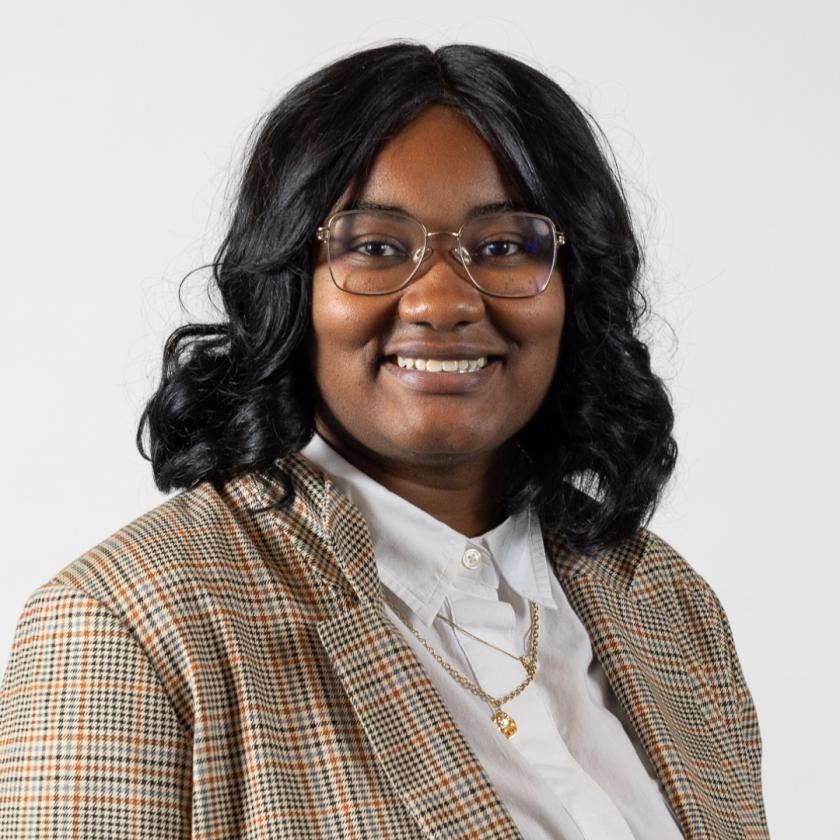
MSLIS student Sydney Durst spent the summer of 2026 interning with the Anchorage Museum. "I found myself really pulling from my lessons in my metadata classes," she said. "A big part of the task was identifying what information was important to put in searchable descriptions for researchers!"
Where did you work, and what was your role?
I worked in the library and archives at the Anchorage Museum. While my role was under a general label of archivist Intern, my duties aligned with those of an archival technician. I organized, categorized, and cataloged archival materials—primarily negatives, photographs, and postcards. Additionally, I assisted with the digitization of photographs in two separate collections that would later be available on the Anchorage Museum website for public viewing. It was also one of my duties to update finding aids and subject guides to reflect the most up-to-date archival holdings as well as utilize language reflective of present-day archival standards. Finally, I assisted with community events to help bring awareness of the archive to the larger Anchorage community and the ways that the public could access information.
How did you find out about the internship?
I discovered the internship through ArchivesGig! It’s a website that has a mixture of job postings, internship opportunities, and professional development events focused on the archival job field, although library roles are posted as well on occasion. This was a resource that multiple professors had mentioned—particularly in my foundational classes IS 505 with Barbara Alvarez and IS 510 with Kate McDowell—that I found very helpful. I discovered this internship there, but the website also gives me an idea of what job skills employers are looking for and, in turn, what classes I should take to acquire them!
What new skills did you acquire?
I gained a lot of practical skills: learning how to use Adobe Bridge, digitizing photographs, and how different photograph materials should be rehoused. I was particularly happy to learn about preservation techniques used for photographs and government documents, as I only had limited exposure to those materials before this summer. Additionally, I learned the importance of emotional and cultural sensitivity—specifically how it applies to accepting, cataloging, and maintaining an archival donation.
What did you like best about working at the Anchorage Museum Library & Archives?
It might be a cliché to say, "the people," but the people. In my opinion, an archive (and museum) really is shaped by the people who work there and how they engage with the broader community. All of my coworkers and supervisors were amazing people who I found inspiring when they shared their own academic and career journeys, but also in how they emphasized an archival mission that is community-centered and based in stewardship rather than ownership. I am really happy that the Anchorage Museum Library & Archives was my first official step into the archives as a future archivist!
What advice would you give to current students who are interested in an internship opportunity?
Say "yes." I applied to the Anchorage Museum internship because the listing aligned with the skills I wanted to acquire and the archive's mission aligned closely with my values. But more importantly, I took my internship search with an attitude of applying to everything that I was interested in, rather than worrying about whether I would get a callback. On a more practical side, I would also advise that students apply to internships about 3–6 months before the cycle they are wanting to intern. It allows time to put together any materials needed for the application and, ideally, takes off the pressure of trying to find something a few weeks before whenever internship season is for their program.