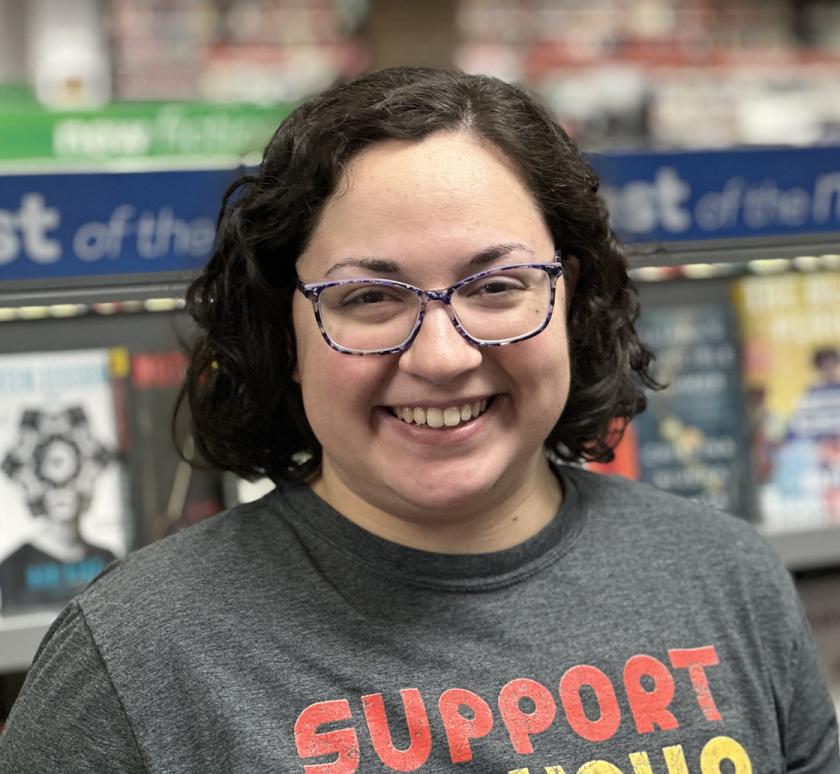
Leep (MSLIS online) student Morgan Rondinelli shares her experience as a mentally ill library professional in the article, "What's Missing in Conversations about Libraries and Mental Illness," which was recently published in the open access, peer-reviewed journal In the Library with the Lead Pipe. She was inspired to write the article to improve the culture of library professionals toward those with mental illnesses.
"I've been writing about mental health, personal experiences, and advocacy, for years," said Rondinelli, who writes about her obsessive-compulsive disorder in the blog My OCD Voice. "I find it meaningful, both as a way to express myself and to hopefully help others feel less alone."
Rondinelli is a library technical assistant at a public library and co-founder of the mental health nonprofit, Not Alone Notes. She previously served an AmeriCorps term, during which she taught Mental Health First Aid around Central Illinois. She holds an MFA in creative and professional writing from Western Connecticut State University and a BS in ecology, evolution, and biodiversity from the University of Michigan.
In her article, Rondinelli maintains that the vision of librarians as helpers and patrons as those who need help is a false dichotomy. She makes the claim that because of their shared experience, mentally ill library staff are better able to help mentally ill patrons.
"With or without more training, we already have a deeper understanding of the symptoms and the experiences of mentally ill patrons," she said.
By being open at her library about her experiences with mental illness, Rondinelli has had coworkers feel comfortable enough to confide in her about their experiences. She appreciates the opportunity to share stories and make connections.
"Working in a public library is so fulfilling. Through the iSchool's Leep program, I can keep working while taking classes online in a renowned program," she said.
Rondinelli was introduced to In the Library with the Lead Pipe in Adjunct Lecturer Katie Chamberlain Kritikos' course, Libraries, Information, and Society (IS 510) and decided to submit an article.
"I'm hoping the article's publication fosters connections with other library professionals who experience mental illness," she said.