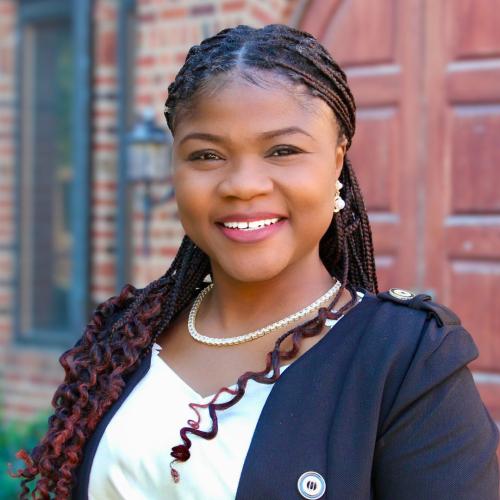
PhD student Adebola Obayemi discusses her internship with the San Francisco Public Library, where she worked on Expanding Information Access for Incarcerated People Initiative. She has been invited to present her proposal on digital literacy for incarcerated populations at the Expanding Information Access for Incarcerated People Convening, which will be held in June in Chicago.
Where did you work, and what was your role?
I completed my internship from September to November 2025 on the Expanding Information Access for Incarcerated People Initiative through the San Francisco Public Library, funded by the Mellon Foundation. I served as a cohort member in the Expanding Services Together program. This nationwide initiative brought together 29 cohort members, including information professionals, LIS students, and community-based practitioners, for three months to equip them with the knowledge and resources needed to advocate and expand library services for individuals who are incarcerated or in the process of reentry.
How did you find out about the internship?
I learned about the project through the initiative's newsletters and website, as well as discussions with my advisor, Teaching Associate Professor Martin Wolske.
What new skills did you acquire?
Although I had prior experience working with incarcerated populations through my volunteer work with the Education Justice Project, specifically with the Reentry Resource Program and the Language Partners Program at Danville Correctional Center, this internship experience revealed the important role of library and information services in supporting incarcerated and reentry populations by addressing systemic barriers to access. I learned how to collaborate with others to solve real-world problems, advocate for more access to information, and develop proposals that address community needs, skills that are central to my future goals of working with underserved communities. This experience will also inform my own initiative, the ObaDebola Initiative, which is committed to advancing digital literacy, health awareness, and access to essential resources in the rural communities in Nigeria.
What did you like best about working at the San Francisco Public Library?
Although this was a remote project, I especially valued the opportunity to connect and collaborate with information professionals from across the country, all working toward creating real-world impact. It was really inspiring to be part of a community committed to expanding access and supporting justice-impacted populations. Additionally, as a result of my work in this initiative, I was invited to speak on a panel at the upcoming Expanding Information Access for Incarcerated People Convening in Chicago on June 25, where I will present my proposal and reflect on my experience in the cohort. I was also awarded a scholarship to support my travel and participation.
What would you advise current students who are interested in an internship opportunity?
I would encourage students to seek out internship opportunities that align with both their professional and research interests, as this makes the experience more meaningful and impactful.