School of Information Sciences

Faculty receive support for AI-related projects from new pilot program

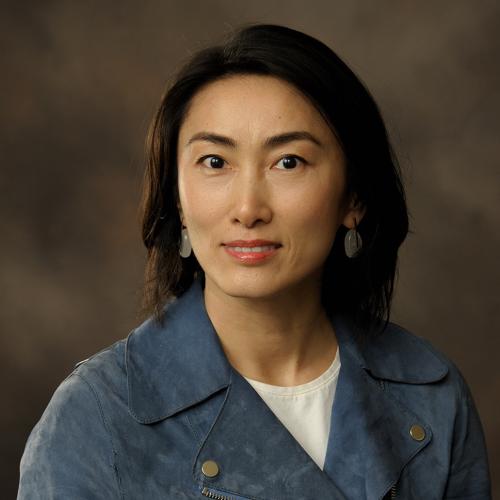
Yun Huang
Yun Huang, Associate Professor
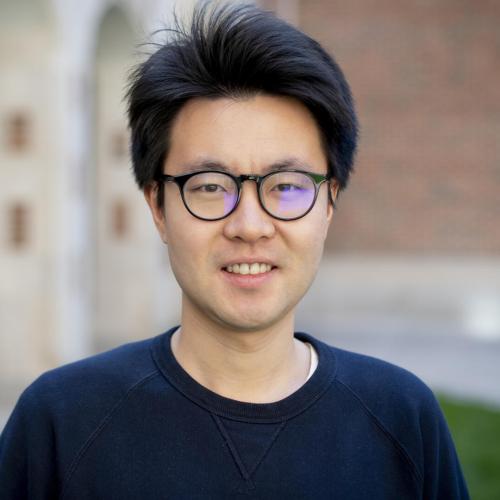
Jiaqi Ma
Jiaqi Ma, Assistant Professor
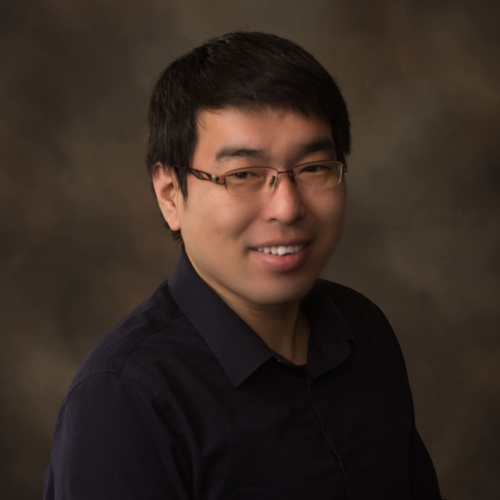
Haohan Wang
Haohan Wang, Assistant Professor

Associate Professor Yun Huang, Assistant Professor Jiaqi Ma, and Assistant Professor Haohan Wang have received computing resources from the National Artificial Intelligence Research Resource (NAIRR), a two-year pilot program led by the National Science Foundation in partnership with other federal agencies and nongovernmental partners. The goal of the pilot is to support AI-related research with particular emphasis on societal challenges. Last month, awardees presented their research at the NAIRR Pilot Annual Meeting.

Huang received $15,000 in computational resources for her project, "Harnessing Large Language Models for Ethical Research and Innovation." AI systems can benefit students by boosting their academic performance, stimulating their curiosity, and making learning more efficient. This is especially important for learners with diverse needs. According to Huang, the project focuses on facilitating the discovery of insightful questions given learning materials to guide and educate learners in scaffolding and creating learning ideas. The goal is to introduce new systems and methods using natural language generation models to augment a learner's discovery process. "The computing support allows us to launch our systems and provide scalable services. It is exciting that over 330 people from about 20 organizations have been using our tools," Huang said. 

Ma received 4,000 node hours for TACC Vista (NVIDIA GH100 Grace Hopper Superchip) for his project, "Principled Quantification of Training Data Influence on Generative AI Models." This research aims to quantify the influence of individual training data points on generative AI models, which will help address AI safety issues concerning privacy, copyright, and hallucination. According to Ma, current methods rely heavily on model retraining, leading to ambiguity in evaluation metrics and high computational costs—especially for large models. His team will conduct research to understand and effectively simulate the randomness inherent in training dynamics, thereby developing more efficient techniques to accurately measure training data influence.

Wang received $90,000 in computing resources for his project, "Toward Virtual Bioinformaticians: Empowering Scientific Discovery in Genomics with LLM-Based Agents." Bioinformaticians handle the management, processing, and analysis of large sets of genomic and molecular data. These specialists play a crucial role in biomedical research, helping scientists examine gene activity and understand biological processes. According to Wang, studies show that bioinformaticians spend nearly half their time on routine data processing, which is not only inefficient but also costly for the industry. He proposes the Rational AI-Operated Bioinformatics Assistant Team (ROBAT)—a system of AI-powered assistants, or "AI Agents," designed to automate routine bioinformatics tasks, from raw data processing to producing visualized results. This will free up bioinformaticians to focus on more complex and innovative research, accelerating discoveries in genomics and beyond, he said.

Updated on
Backto the news archive

Related News

Hassan and Bashir receive distinguished paper award

A paper co-authored by PhD student Muhammad Hassan and Associate Professor Masooda Bashir received the Distinguished Paper Award at the Workshop on Security and Privacy in Standardized IoT, which was held last month in San Diego, California, in conjunction with the Network and Distributed System Security (NDSS) Symposium 2026. 

iSchool researchers to present work at Technocracy Conference

This week, iSchool PhD students and faculty will present their research at the Technocracy Conference. Hosted by the Unit for Criticism and Interpretive Theory at the University of Illinois on March 5–6, the conference will begin with a panel of graduate student papers and continue the following day with invited speakers and a keynote. All events will take place at the Levis Faculty Center on the Urbana campus. 

New multi-institutional project to use AI to represent past historical periods

A new project led by a team of researchers from four universities aims to create and evaluate language models that represent past historical periods. The project, "Artificial Intelligence for Cultural and Historical Reasoning," was recently selected for a 2025 Humanities and AI Virtual Institute (HAVI) award from Schmidt Sciences. The $800,000 grant will be split among four institutions: Cornell University, the University of Illinois Urbana-Champaign, The University of British Columbia, and McGill University. Professor Ted Underwood will serve as the principal investigator for the portion of the project at Illinois.

Ted Underwood

Wang group to present at WSDM26

Professor and Associate Dean for Research Dong Wang and PhD student Ruohan Zong will present their research at the 19th ACM International Conference on Web Search and Data Mining (WSDM 26), which will be held from February 22–26 in Boise, Idaho. WSDM is a premier international conference in web search, data mining, and AI, known for its highly selective acceptance rates. This year, the acceptance rate for the main track of the conference was only 16 percent. 

Dong Wang

New NSF award supports innovative role-playing game approach to strengthening research security in academia

A new National Science Foundation (NSF) award will support an innovative effort in the School of Information Sciences to strengthen research security by using structured role-playing games (RPG) to model the threats facing academic research environments. The project, titled "REDTEAM: Research Environment Defense Through Expert Attack Modeling," addresses a growing challenge: balancing the open, collaborative nature of academic research with increasing national security risks and sophisticated adversarial threats. 

School of Information Sciences

501 E. Daniel St.

MC-493

Champaign, IL

61820-6211

Voice: (217) 333-3280

Email: ischool@illinois.edu

Back to top