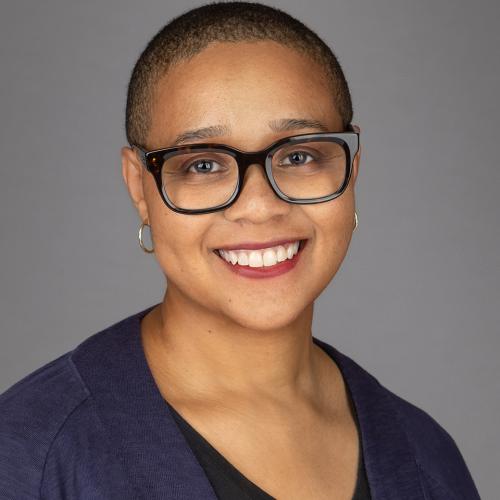
Interim Dean and Professor Emily Knox’s article “Silencing Stories: Challenges to Diverse Books,” has been selected by the International Journal of Information, Diversity, Inclusion (IJIDI) for its 10th anniversary issue.
Knox’s paper "offers a deeply meaningful contribution to information science research," IJIDI editors said, noting that it expands "crucial equity, diversity, and inclusion scholarship while demonstrating highly innovative insight or methodologies in our field."
The article, which originally appeared in the journal in April 2019, was one of 13 selected from more than 300 publications based on highest readership and most profound impact. In the article, Knox focuses on not just how many and which books were requested to be removed from public libraries and school curricula, but who requested the removals and their reasoning
"The interpretive strategies of text that are used against diverse books can also be linked to issues of race and power," Knox wrote.
Using Atlas.ti software, Knox analyzed documents including forms, letters, and emails, primarily in connection to four books with removal requests:
- Toni Morrison’s Beloved, which was being taught in the Fairfax County Public School District in Virginia in 2012
- Sherman Alexie’s The Absolutely True Diary of a Part-Time Indian, in the New London-Spice School District in Minnesota in 2017
- Morrison’s The Bluest Eye, in the Northville Public Schools in Michigan in 2016
- Gayle E. Pitman’s This Day in June, in the West Chicago Public Library in Illinois in 2017
Knox’s analysis focused on the arguments made by the challengers, as well as how they identified themselves—as taxpayers or parents, for example — "thereby invoke[ing] their own symbolic power," she wrote.
She found two common themes in the arguments. The first was that the topic was unsuitable for the age group. Both Morrison books were described as inappropriate for high school students because they contained scenes of sex and violence. One challenger objected to This Day in June, which is about Pride celebrations and is intended for four-to-eight-year-olds, writing that children of that age are too young to read about human sexuality.
The second was that a different book would cover the same idea and be less offensive. Instead of The Bluest Eye, one challenger wrote, students could read Gifted Hands by Ben Carson for its message about "overcoming poverty and the importance of learning."
In the face of these and other challenges, Knox urged teachers and librarians to support intellectual freedom—and to have robust policies that reflect that support.
"All people deserve both windows and mirrors that describe the human condition,” Knox concluded in her article, “and that cannot be accomplished when diverse voices are silenced."
Knox was pleased to have the article included in the special issue, noting that "Since the publication of 'Silencing Stories,' the United States has seen a sharp increase in the number of diverse books targeted for censorship. These cases have reaffirmed the findings of the research regarding challengers’ justifications for singling out these books."