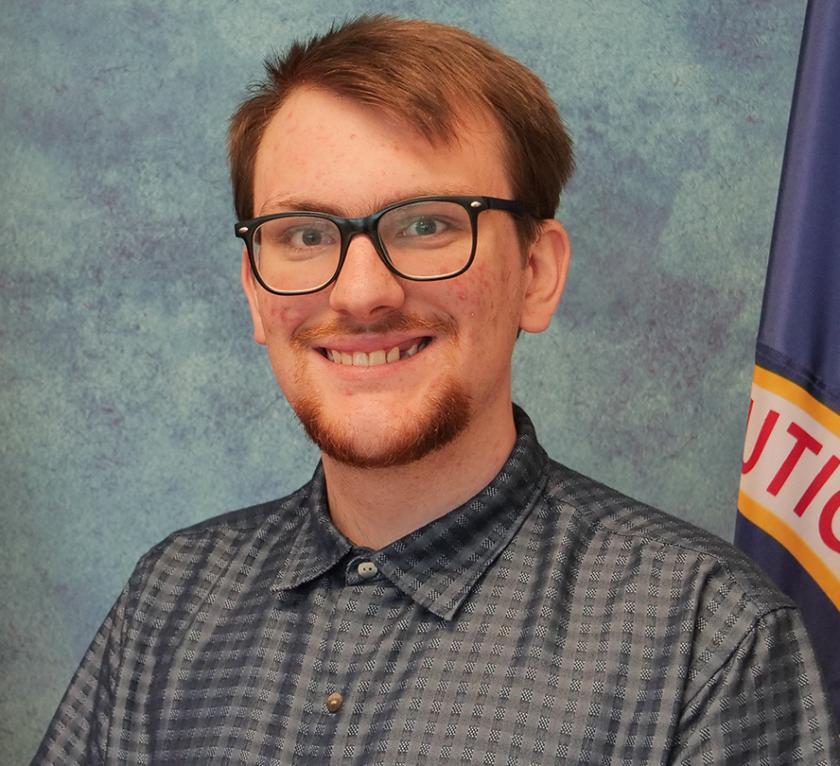
BSIS+DS student Jackson Clark discusses his internships with NASA and the skills he gained, including the soft skills that come from working as part of a team.
Where did you intern, and what was your role?
I've completed four internships at NASA—two full-time summer internships and two part-time internships during the school year.
I first started interning at NASA in the summer of 2022. I worked at Marshall Space Flight Center (MSFC) in Huntsville, Alabama, in the Payload Operations Integration Center. My job was to create automation software for the ISS flight controllers and assess additional sources of automation.
My next two internships were remote part-time internships with the High Energy Astrophysics Science Archive Research Center (HEASARC) at Goddard Space Flight Center. I worked on upgrading their data tools to make it easier to access space telescope data. I also worked on a data science project that applied machine learning to neutron star classification.
Last summer, I held a remote full-time internship at NASA Ames Research Center. I worked on using machine learning to build a framework for large-scale, multi-agent pathfinding to govern airspace for delivery drones.
How did you find out about the internships?
I've always been interested in space, so NASA was a dream opportunity for me. I applied to as many projects as I could and thankfully was selected for an internship opportunity. I found my next opportunity by networking within NASA during my time at MSFC so that I could explore different mission directorates and narrow down my career paths.
What new skills did you acquire during your time with the agency?
The skills that I value the most from my internships aren't the hard technical skills but rather the essential soft skills that come with working in teams. NASA employs people with many different backgrounds and skillsets, so being able to communicate effectively with people who didn't have the same job as me was a must.
What did you like best about working for the agency?
NASA's mission attracts the best of the best. Every single person I worked with during my time there wasn't just extremely talented but also a great team player who you could easily communicate with about any subject. Everyone there is happy to help you with whatever you're working on and wants to bring out the best in you.
What would you advise current students who are interested in an internship opportunity?
Don't stop applying. The internship process is extremely daunting, and you'll be rejected by most of the places where you apply. I've applied to well over a thousand internships during my undergraduate career. Most of the time you get rejected, and even if you do get an interview, there is still a high chance of failure. Don't let failure discourage you from applying and interviewing and learn your lessons from each interview until you find the right opportunity.